What Your Minerals Are Doing Behind the Scenes
Published on


What Your Minerals Are Doing Behind the Scenes
Your body is constantly doing things you never have to think about.
A muscle contracts, then releases. Skin cells divide and replace themselves. Minerals are absorbed, transported, and sometimes even compete with one another.
Behind those everyday processes is a surprisingly intricate system of mineral biology.
Why Relaxing a Muscle Takes Energy
We tend to think of muscle contraction as the "work" and relaxation as what happens when the work stops. At the cellular level, relaxation is active too.
When a muscle contracts, calcium helps trigger the interaction between the proteins that generate force. For the muscle to return toward its resting state, that calcium has to be actively moved back into storage.
That reset process requires ATP, the molecule cells use to transfer energy. And magnesium is essential to ATP-dependent reactions throughout the body. Magnesium also contributes to normal neuromuscular function and helps regulate calcium and potassium channels.
So magnesium's connection to muscle function goes deeper than the familiar idea of "relaxation." It supports part of the cellular machinery behind the entire contraction-and-release cycle.

Zinc Works Where You Can't See It
Your skin may look almost identical from one morning to the next, but underneath the surface, cells are continuously being replaced. For a new cell to form, DNA has to be copied, proteins have to be built, and the cell cycle has to progress normally.
Zinc participates in hundreds of enzymes and proteins involved in those processes, including DNA synthesis, protein production, and cell proliferation.
That's why zinc plays such a fundamental role in normal skin physiology and cellular renewal.
And it's a useful reminder that nutrients often support health in ways you don't immediately feel or see.

Minerals Can Affect Other Minerals
Here's a part of mineral nutrition that's easy to miss: nutrients don't always work independently of one another. Zinc and copper are a classic example.
At higher intakes, zinc triggers more production of a copper-binding protein inside intestinal cells. Copper that gets bound there is less available to be absorbed into the body. Copper, meanwhile, serves as a cofactor for enzymes involved in energy metabolism, connective tissue formation, and other normal physiological processes.
That means more of one mineral isn't automatically better. Balance matters too.

What Should You Actually Look for on a Mineral Label?
The amount listed on the Supplement Facts panel matters, but it isn't the whole story. Three other questions are worth asking:
What form is it in? Different magnesium compounds, for example, can differ in characteristics such as solubility and bioavailability.
Does the formula account for known nutrient interactions? Zinc and copper are a good example of why minerals shouldn't always be considered in isolation.
Was the finished formula evaluated as a whole? A collection of good ingredients doesn't automatically tell you how a complete product will perform.
Those are the kinds of questions that shape how we formulate at BIOptimizers.

What Should You Actually Look for on a Mineral Label?
Our BIOLab is where we test formulas against exactly this kind of complexity — not just whether an ingredient works on its own, but how it performs once it's part of a complete system.
That thinking is why Magnesium Breakthrough combines seven forms of magnesium instead of one. People absorb and respond to different forms differently, so a single-form formula only tells part of the story.
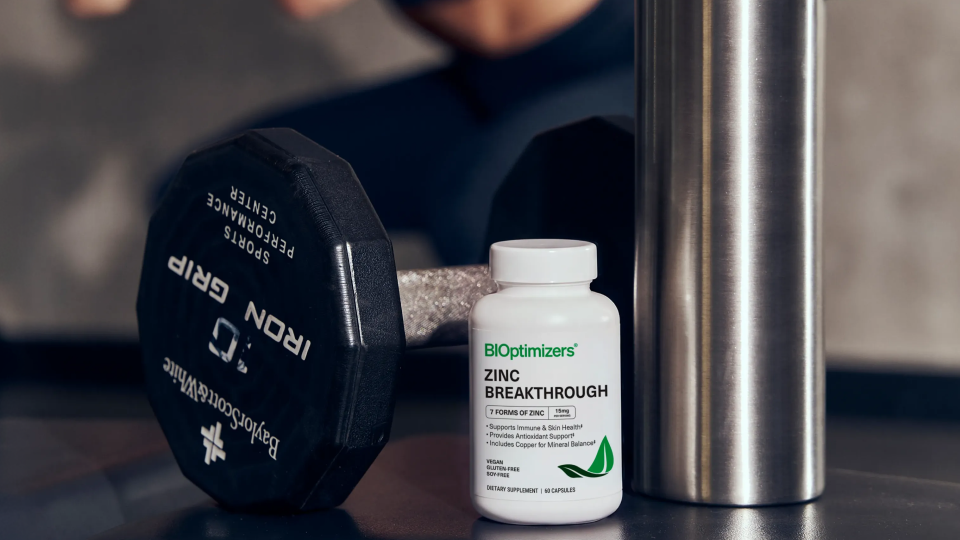
It's also why Zinc Breakthrough doesn't stop at zinc. Alongside seven forms of zinc, it includes chelated copper and buffered vitamin C, formulated to an 8:1 zinc-to-copper ratio — built with the zinc-copper relationship in mind rather than around it.*
Because in mineral science, the ingredient list is only half the formula. How the pieces are balanced is the other half.

References
-
- Touyz, R. M., de Baaij, J. H. F., & Hoenderop, J. G. J. (2024). “Magnesium disorders.” The New England Journal of Medicine, 390(21), 1998–2009. https://doi.org/10.1056/NEJMra1510603
- Chasapis, C. T., Ntoupa, P.-S. A., Spiliopoulou, C. A., & Stefanidou, M. E. (2020). “Recent aspects of the effects of zinc on human health.” Archives of Toxicology, 94(5), 1443–1460. https://doi.org/10.1007/s00204-020-02702-9
- Lin, P.-H., Sermersheim, M., Li, H., Lee, P. H. U., Steinberg, S. M., & Ma, J. (2018). “Zinc in wound healing modulation.” Nutrients, 10(1), 16. https://doi.org/10.3390/nu10010016
- Stiles, L. I., Ferrao, K., & Mehta, K. J. (2024). “Role of zinc in health and disease.” Clinical and Experimental Medicine, 24, Article 38. https://doi.org/10.1007/s10238-024-01302-6
- Lutsenko, S., Roy, S., & Tsvetkov, P. (2025). “Mammalian copper homeostasis: Physiological roles and molecular mechanisms.” Physiological Reviews,, 105(1), 441–491. https://doi.org/10.1152/physrev.00011.2024
- Pardo, M. R., Garicano Vilar, E., San Mauro Martín, I., & Camina Martín, M. A. (2021). “Bioavailability of magnesium food supplements: A systematic review.” Nutrition, 89, 111294. https://doi.org/10.1016/j.nut.2021.111294