Why Digestion Starts Before You Eat (And Why It Matters for Energy)
Published on


Why Digestion Starts Before You Eat (And Why It Matters for Energy)
If you’ve ever finished a meal and still felt low on energy, it’s easy to wonder what went wrong.
Most of us would assume something was off about the food itself. Maybe it wasn’t “healthy enough.” But in many cases, that’s not the issue. What matters more is what your body can do with what you eat.
Here’s an interesting fact: your body doesn’t get energy directly from food. It only gets energy from what it can break down, absorb, and convert into nutrients.
And that process begins earlier than you might think.

Your Body Starts Digesting Before You Take a Bite
Before you pick up your fork, your body is already preparing. By seeing your food. Smelling it. Even thinking about it. That’s enough to start turning digestion on.
Your mouth begins producing saliva. Your stomach starts increasing acid. Digestive enzymes begin getting ready to break food down.
This early stage is known as the cephalic phase of digestion. Research shows it can account for a meaningful portion of digestion, especially the acids and enzymes in your stomach, with estimates around 20 to 30 percent in some cases.
Your body is already setting the stage. Whether you notice it or not.
Why Your Body Isn’t Getting Everything From Your Food
It’s easy to think energy comes from what you eat. But biologically, it’s a step-by-step process. Your body has to, break food down, absorb the nutrients, and convert them into usable energy
Each step builds on the one before it.
If breakdown is incomplete, fewer nutrients become available for absorption. If absorption is limited, less energy reaches your cells.
Which means: You can eat well and still not get the full benefit from your food.
How To Prime Your Body For Digestion
Your body already knows how to digest food efficiently. But it relies on signals to get the process going, and a few small habits can make a real difference.
1. Pause before you eat
Taking a moment to look at your food can help activate early digestive responses as part of the cephalic phase.
2. Take one slow breath
A single breath can help shift your body into the parasympathetic state - the “rest and digest” mode, where digestion is prioritized. This state is associated with increased enzyme secretion and blood flow to the gut.
3. Be present at the start of a meal
The beginning of a meal plays a bigger role than most people realize. Research suggests that attention and awareness during eating can influence how meals are experienced and processed.
Even brief awareness at the start can help reinforce digestive signaling.

When Physiology Meets Real Life
Of course, real life doesn’t always make this easy. Stress, distraction, eating on the run, aging, and modern dietary patterns can all affect how well your system works. Even when you’re doing everything right, your system doesn’t always operate at full capacity.
That’s where targeted support can help.
How To Support More Complete Digestion
Digestive enzymes are responsible for breaking food down into smaller components - proteins into amino acids, fats into fatty acids. When enzyme activity is lower, digestion may be less complete. And that can limit how much nutrition becomes available.
Supplemental digestive enzymes are designed to support this step. Formulations like MassZymes provide a broad spectrum of enzymes that help break down proteins, fats, and carbohydrates. They support more complete digestion, especially as natural enzyme production declines with age.
Clinical research on digestive enzyme supplementation shows benefits in improving nutrient breakdown and reducing digestive discomfort.
When breakdown is more complete, nutrients become available for absorption.
Don’t Forget About Energy
Breakdown is only the first step. Once nutrients are absorbed, your body still needs to convert them into usable energy. Magnesium plays a central role here.
It’s required for the production and use of ATP, the body’s primary energy molecule, and is involved in over 300 biochemical reactions. Magnesium-dependent enzymes are directly involved in energy metabolism. So when levels are low, your body’s ability to generate energy efficiently can be affected.
Comprehensive formulations like Magnesium Breakthrough provide multiple forms of magnesium designed to support this process across different systems in the body.
Research shows magnesium status is closely linked to energy production, metabolic function, and overall cellular performance.
The Bigger Picture
When you zoom out, the pathway is simple:
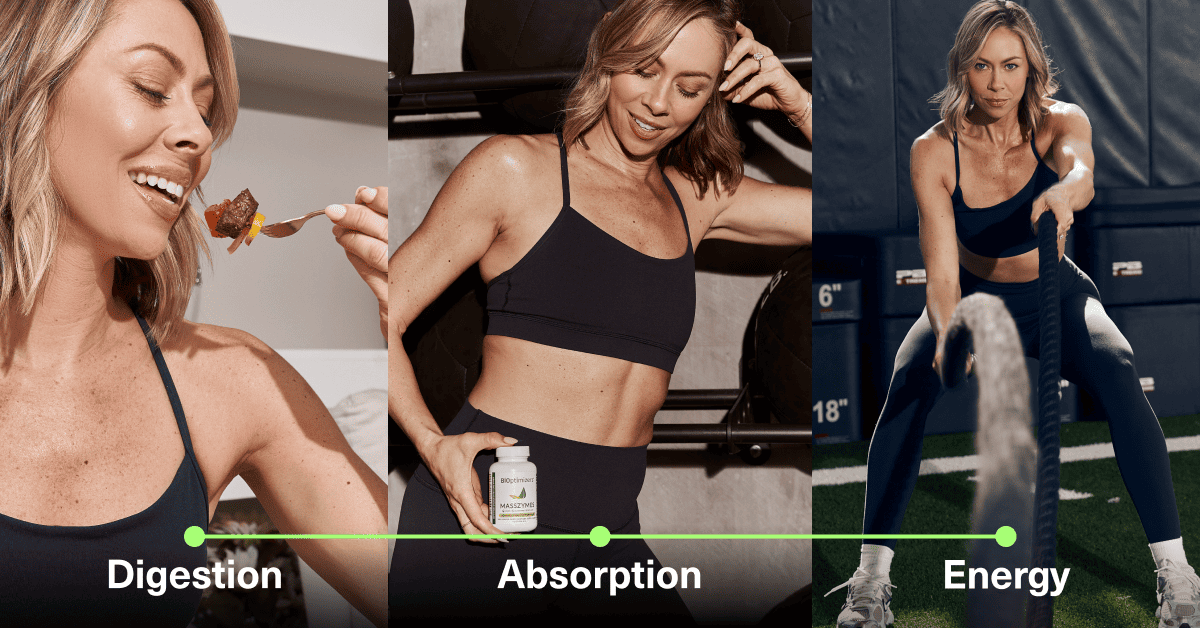
Digestion → Absorption → Energy
Each step builds on the last. And when you support the steps even in small ways, your body is better able to get value from the food you’re already eating.
Bringing It Back to You
Energy isn’t just about what you eat. It’s about what your body can do with the food you give it. And that process starts earlier than most people realize. Before you even take the first bite. Because when your body is prepared, digestion and nutrient absorption work more effectively.
And that’s where science becomes something you can actually feel.
References
- Power, Michael L, and Jay Schulkin. “Anticipatory physiological regulation in feeding biology: cephalic phase responses.” Appetite vol. 50,2-3 (2008): 194-206. doi: 10.1016/j.appet.2007.10.006
- Rogers, Michael A, and Amanda J Wright. “The Role of Food Structure on Fatty Acid Bioaccessibility: A Decade of TIM-1 Simulated Digestion Studies in Review.” Molecular nutrition & food research vol. 70,6 (2026): e70434. doi:10.1002/mnfr.70434
- Russo, Marc A et al. “The physiological effects of slow breathing in the healthy human.” Breathe (Sheffield, England) vol. 13,4 (2017): 298-309. doi:10.1183/20734735.009817
- Herbert, B. M. et al. (2013). Interoceptive sensitivity and eating behavior. American Journal of Clinical Nutrition. https://doi.org/10.3945/ajcn.112.045245
- de Baaij, J. H. F. et al. (2015). Magnesium in man: Implications for health and disease. Physiological Reviews. https://doi.org/10.1152/physrev.00012.2014
- Paulussen, Kevin J M et al. “Acute Microbial Protease Supplementation Increases Net Postprandial Plasma Amino Acid Concentrations After Pea Protein Ingestion in Healthy Adults: A Randomized, Double-Blind, Placebo-Controlled Trial.” The Journal of nutrition vol. 154,5 (2024): 1549-1560. doi:10.1016/j.tjnut.2024.03.009